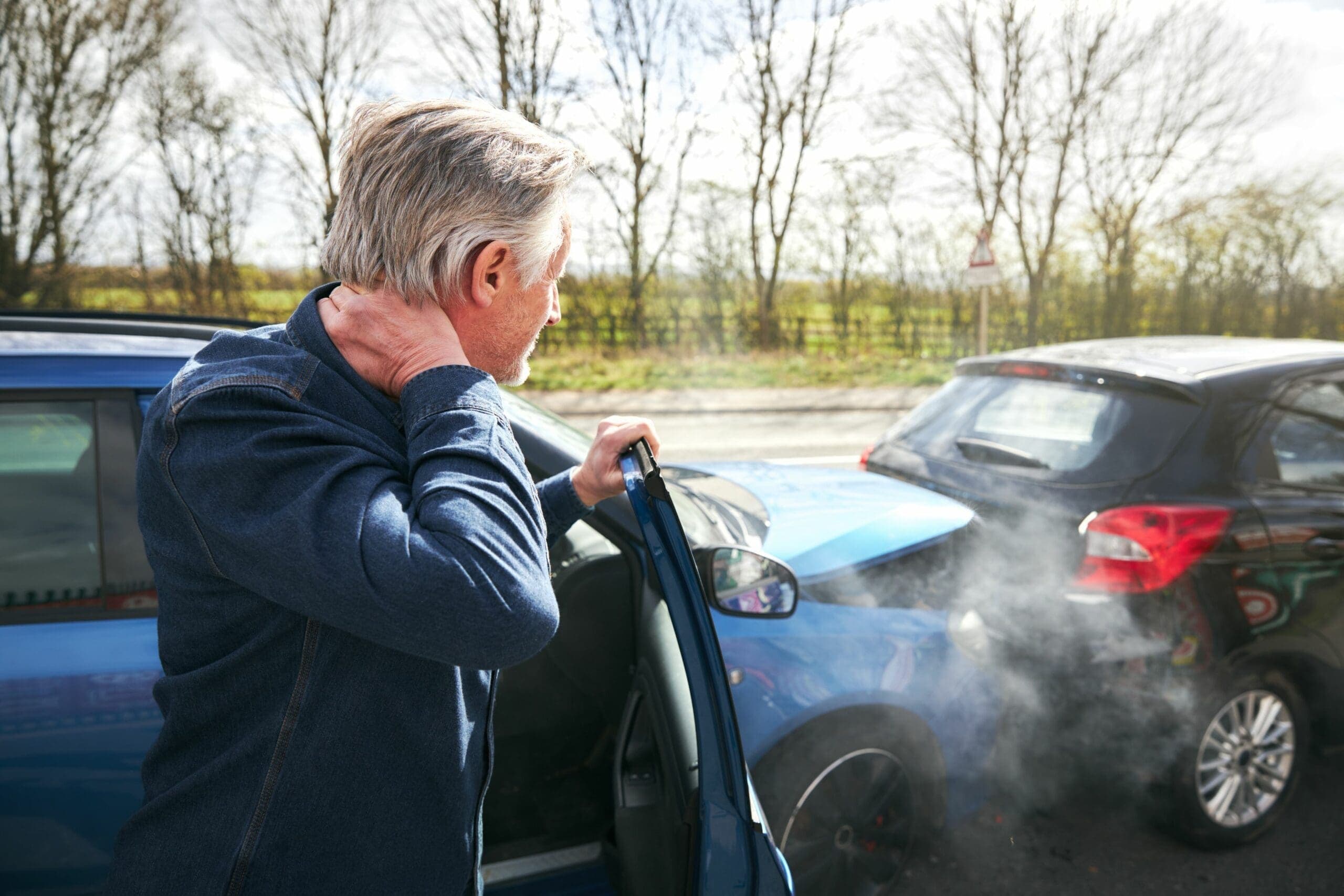
Uninsured motorist (UM) coverage pays for your injuries when the driver who caused the crash has no insurance, can't be identified after a hit-and-run, or has an insurer that denies coverage. Underinsured motorist (UIM) coverage pays the amount your damages exceed the at-fault driver's bodily injury limits, up to your own UIM limits. In Nevada, UM coverage is built into every auto policy unless you reject it in writing, and insurers must offer UM/UIM at the same limits as your own bodily injury coverage.
That makes UM/UIM the coverage most likely to decide whether a serious Nevada crash leaves you whole. Here's what it pays, when it applies, and how the claim works.
What Do Uninsured and Underinsured Motorist Coverage Pay For?
Both coverages pay the damages you'd be legally entitled to recover from the at-fault driver for bodily injury. That includes medical bills, lost income, and pain and suffering, up to your policy limits. Here's how they fit with the other coverages on a Nevada policy:
| Coverage | When It Applies | What It Pays | Nevada Rule |
|---|---|---|---|
| Uninsured motorist (UM) bodily injury | At-fault driver has no insurance, is a hit-and-run, or their insurer denies coverage or is insolvent | Your injury damages, including pain and suffering, up to your UM limit | Included unless rejected in writing |
| Underinsured motorist (UIM) bodily injury | At-fault driver's bodily injury limits are too low | Damages above their limits, up to your UIM limit | Must be offered at your bodily injury limits |
| Uninsured motorist property damage | An uninsured driver damages your car | Vehicle repairs, subject to policy terms | Optional |
| MedPay | Any crash, regardless of fault | Medical expenses up to your limit | Must be offered at $1,000 or more |
| Collision | Any crash, regardless of fault | Your own car, minus your deductible | Optional |
| C | When | Pays | Rule |
|---|---|---|---|
| Uninsured motorist (UM) bodily injury | No insurance, hit-and-run with contact, or insurer denies or is insolvent | Your injury damages, including pain and suffering | Included unless rejected in writing |
| Underinsured motorist (UIM) bodily injury | At-fault driver's limits are too low | Damages above their limits, up to your UIM limit | Must be offered at your BI limits |
| Uninsured motorist property damage | An uninsured driver damages your car | Vehicle repairs, per policy terms | Optional |
| MedPay | Any crash, regardless of fault | Medical expenses up to your limit | Must be offered at $1,000+ |
| Collision | Any crash, regardless of fault | Your own car, minus the deductible | Optional |
For damage to your car specifically, this guide covers uninsured motorist property damage coverage in more detail.
Who does UM coverage protect?
More people than most policyholders realize. A Nevada Division of Insurance bulletin describes UM/UIM as protecting the named insured, relatives who live in the same household, and anyone riding in the insured vehicle.
Is Uninsured Motorist Coverage Required in Nevada?
Not strictly, but it's the default. Under NRS 690B.020, no Nevada auto liability policy can be issued without uninsured vehicle coverage unless the named insured rejects it in writing on the insurer's form. Once rejected, it stays off at renewal unless you request it in writing. The coverage must be at least the state's minimum bodily injury limits.
NRS 687B.145 adds that insurers must offer UM/UIM in an amount equal to the bodily injury limits you buy, and every renewal must include the offer form. When Nevada raised its minimums to 25/50/20 in 2018, the Division of Insurance noted that drivers with UM below 25/50 had to re-select or reject it.
How common are uninsured and underinsured drivers?
Common enough to plan for. The Insurance Research Council reported that 15.4% of U.S. drivers were uninsured in 2023, and 33.4% were either uninsured or underinsured. In other words, about one in three drivers on the road may not have enough coverage to pay for a serious injury.
How Does Underinsured Motorist Coverage Work in Nevada?
Nevada's UIM coverage pays the damages that exceed the at-fault driver's bodily injury limits, up to your own UIM limits. Picture a hypothetical crash where the at-fault driver carries the $25,000 minimum and your injury damages total $100,000:
| Step | Amount |
|---|---|
| Your total injury damages | $100,000 |
| At-fault driver's bodily injury limit pays | $25,000 |
| Remaining damages | $75,000 |
| Your UIM coverage (with a $100,000 limit) pays | $75,000 |
| Your UIM coverage (with a $50,000 limit) pays | $50,000 |
- With $100,000 UIM
- With $50,000 UIM
- With no UIM
Two details are easy to miss. UIM also applies when a claim against a government vehicle hits Nevada's cap on government liability, covering damages above that cap up to your limits. And an insurer that pays under UIM generally can't turn around and pursue the underinsured driver for that amount.
Can you stack UM/UIM coverage in Nevada?
Often not. NRS 687B.145 lets insurers limit your recovery to the highest single applicable limit when you have coverage under more than one policy or vehicle, as long as that limit is stated clearly and prominently. That anti-stacking language is void, though, if you paid a separate premium calculated for full coverage on the same risk. Read the declarations and endorsements before assuming either way.
What If You Were Hit by an Uninsured or Hit-and-Run Driver?
Start with the scene steps in this Nevada car accident checklist, then pay attention to three UM-specific points.
- Report it to police. For a hit-and-run to count as an uninsured vehicle, NRS 690B.020 generally requires physical contact with you or your vehicle and a police report made within the time Nevada's crash reporting laws require.
- Collect whatever insurance information exists. If the other driver gave you a policy that later turns out to be invalid, keep it. A vehicle in an injury crash is presumed uninsured if no proof of insurance reaches the DMV within 60 days.
- Notify your own insurer promptly. Your policy likely has notice requirements for UM claims.
What if the hit-and-run car never touched you?
That's the hardest version of the claim. Nevada's statute ties hit-and-run UM coverage to physical contact with you or the vehicle you were in. If a driver ran you off the road without contact, talk to a lawyer before assuming you're out of options, since the facts matter a great deal.
How Do UM and UIM Claims Work With Your Own Insurer?
A UM or UIM claim is filed with your own insurance company, but it doesn't work like a fender-bender claim. Your insurer steps into the at-fault driver's shoes, so it can dispute fault and challenge the value of your injuries. You still have to show the other driver was legally at fault, which is why how fault is determined in Nevada matters here too.
Nevada law gives you some leverage in that process:
- Deadlines on decisions. Under NRS 690B.012, insurers generally must approve or deny a policyholder's claim within 30 days and pay within 30 days of approval, with interest if they're late.
- The other driver's limits. Under NRS 690B.024, once you give the at-fault driver's insurer written authorization for your medical records, it must share their declarations page, including policy limits, within 5 business days. That's how you know when a UIM claim is on the table.
- No forced arbitration. Under NRS 690B.017, arbitration clauses in Nevada auto policies aren't binding on the policyholder.
- No rate hike for not-at-fault claims. NRS 687B.385 bars insurers from raising your premium or dropping you because of a claim where you weren't at fault.
| T | D | Law |
|---|---|---|
| Report the crash to police | Required for hit-and-run UM claims, along with physical contact | NRS 690B.020 |
| Notify your insurer promptly | Check your policy for UM/UIM notice requirements | Your policy |
| Get the other driver's limits | Their insurer must share the declarations page within 5 business days of your medical authorization | NRS 690B.024 |
| Expect a decision in 30 days | Insurers generally must approve or deny within 30 days, then pay within 30 days | NRS 690B.012 |
| Don't accept forced arbitration | Arbitration clauses in Nevada auto policies are not binding on you | NRS 690B.017 |
| No rate hike for not-at-fault claims | Insurers cannot raise your premium or drop you for these claims | NRS 687B.385 |
If your insurer stalls or lowballs a UM claim without a good reason, you can file a complaint with the Nevada Division of Insurance. Keep the broader deadline in mind as well: Nevada's statute of limitations, NRS 11.190, generally gives you two years to file an injury lawsuit against the at-fault driver.
What If You Were the Uninsured Driver?
You may still have a claim. Being uninsured yourself doesn't erase another driver's responsibility for a crash they caused, so you can pursue the at-fault driver's liability coverage for your injuries. Driving without the required coverage has its own consequences, including possible cancellation of your registration by the DMV, so getting insured before driving again matters.
How Can Meesha Moulton Law Help With a UM or UIM Claim?
UM and UIM claims put you across the table from your own insurance company, which can feel strange and unfair after paying premiums for years. Meesha Moulton personally reviews every case, and consultations are free for personal injury matters, so you can find out what your policy actually covers before you give your insurer a recorded statement.
Learn more about working with a Las Vegas car accident lawyer, or request a free consultation to go over your policy and your crash.
Frequently Asked Questions About Uninsured Motorist Coverage in Nevada
Is uninsured motorist coverage required in Nevada?
Not strictly. Nevada law requires every auto policy to include uninsured motorist coverage unless the named insured rejects it in writing, and insurers must offer UM/UIM at the same limits as your bodily injury coverage. If you're not sure whether you rejected it, check your declarations page or ask your insurer for a copy of the selection form.
Does uninsured motorist coverage cover hit-and-run accidents in Nevada?
Yes, in most cases. Nevada treats a hit-and-run vehicle as uninsured when the injury resulted from physical contact with you or the vehicle you were in, and the crash was reported to police within the time Nevada law requires. Report the crash and notify your insurer as soon as possible.
Will my rates go up if I file an uninsured motorist claim in Nevada?
Not for a claim where you weren't at fault. Nevada law prohibits insurers from raising your premium, canceling, or refusing to renew your policy because of a claim for which you weren't at fault. Rates can still change for other reasons unrelated to the claim.
Does uninsured motorist coverage pay for pain and suffering?
Yes. UM and UIM coverage pay the bodily injury damages you'd be legally entitled to recover from the at-fault driver, which includes pain and suffering along with medical bills and lost income. Your recovery is capped by your policy limits.
How much uninsured motorist coverage should I carry in Nevada?
It depends on your finances, health coverage, and who rides with you. Nevada insurers must offer UM/UIM up to the bodily injury limits you buy, so raising your liability limits also raises the UM/UIM you can carry. Many drivers match their UM/UIM to their bodily injury limits for that reason.
What happens if the at-fault driver's insurance isn't enough?
Your underinsured motorist coverage can pay the damages above their bodily injury limits, up to your own UIM limit. The at-fault driver's insurer is typically the first to pay, and your UIM coverage handles the rest. Without UIM, the remaining amount usually has to come from the at-fault driver personally, which is often difficult to collect.