Fault in a Nevada car accident comes down to one question: which driver failed to use reasonable care? Insurance adjusters answer it first, using the police report, photos, vehicle damage, witness statements, and Nevada's traffic laws. If the answer is disputed, a jury assigns each driver a percentage of fault. Under Nevada's 51% rule, you can recover as long as your share isn't greater than the other side's, but your award shrinks by your percentage.
That percentage is money, which is why fault is where most car accident claims are won or lost. Here's how fault is determined in a Nevada car accident, who is usually at fault in common crashes, and how to push back if you're being blamed.
Is Nevada an At-Fault State?
Yes. Nevada uses a traditional fault-based system, so the driver who caused the crash is responsible for the other driver's injuries and property damage. In practice, that means a claim against the at-fault driver's liability insurance, which every Nevada driver must carry under NRS 485.185.
That's different from no-fault states, where your own policy pays your medical bills first regardless of who caused the crash. Nevada repealed its no-fault law decades ago, so there's no PIP requirement here. This guide explains what PIP covers and what Nevada drivers have instead. In Nevada, proving the other driver was at fault is what unlocks their coverage.
Who Decides Fault After a Car Accident in Nevada?
Three groups can weigh in, and they don't always agree: the insurance companies, the police, and, if the case is filed, a jury.
How do insurance companies determine fault?
Adjusters from each driver's insurer review the police report, both drivers' statements, photos of the scene and vehicles, the location of the damage, witness accounts, and any available video. They compare what happened to Nevada's rules of the road and assign a percentage of fault to each driver.
That first percentage is an opinion, not a ruling. It's often shaped by incomplete information, and it can change when better evidence comes in.
Does the police report determine fault?
Not by itself. A police report is important evidence, and an officer's description of the crash and any citations carry real weight with adjusters. But insurers and juries make their own decisions about fault. You can request a copy through the Nevada Highway Patrol crash report page if a trooper responded, or from the agency that handled your crash.
If the report has factual errors, like the wrong direction of travel or a missing witness, contact the agency and ask about adding a supplemental statement.
What happens if fault goes to court?
A jury decides. Under Nevada's comparative negligence statute, NRS 41.141, the jury determines the total damages, then assigns a percentage of fault to each party. Your recovery is reduced by your percentage, and it's barred if your fault is greater than the combined fault of the drivers you're suing.
How Does Nevada's 51% Fault Rule Work?
Nevada follows modified comparative negligence, often called the 51% bar. You can recover as long as your fault is 50% or less, and your award drops by your share. Here's how that plays out on a hypothetical $100,000 claim:
| Your Share of Fault | What Happens | You Recover |
|---|---|---|
| 0% | Full recovery | $100,000 |
| 20% | Reduced by 20% | $80,000 |
| 40% | Reduced by 40% | $60,000 |
| 50% | Reduced by 50% | $50,000 |
| 51% or more | Recovery barred | $0 |
What if more than one driver caused the crash?
Your fault is compared against the combined fault of the drivers you're pursuing. Under NRS 41.141, each at-fault driver generally pays only their own percentage of the judgment, not someone else's share. That matters in multi-car crashes on the 15 or the 215, because if one at-fault driver has little or no insurance, that driver's share can be hard to collect.
Who Is Usually at Fault in Common Nevada Crashes?
Nevada's traffic laws create starting points for fault. They aren't automatic, but adjusters lean on them heavily.
| Crash Type | Usually at Fault | Nevada Rule | When That Can Change |
|---|---|---|---|
| Rear-end collision | The following driver | Following too closely (NRS 484B.127) | Sudden cut-in, reversing, or brake lights out |
| Left turn at an intersection | The driver turning left | Must yield to oncoming traffic (NRS 484B.253) | Oncoming driver ran a red light or was speeding |
| Merging onto a freeway | The driver entering | Must yield to freeway traffic (NRS 484B.263) | Freeway driver swerved or sped up into the gap |
| Red light crash | The driver who ran the light | Traffic signal rules | Signal timing, witness conflicts, or video |
| Parking lot crash | Often shared | General duty of care | Who had the right of way in the lane |
| Type | Who | Law | Exc |
|---|---|---|---|
| Rear-End | Following driver | NRS 484B.127 | Sudden cut-in, reversing, broken brake lights |
| Left Turn | Driver turning left | NRS 484B.253 | Oncoming driver ran the red or was speeding |
| Freeway Merge | Driver entering | NRS 484B.263 | Freeway driver swerved or sped into the gap |
| Red Light | Driver who ran it | Traffic signal rules | Signal timing disputes or conflicting witnesses |
| Parking Lot | Often shared | General duty of care | Who had the right of way in the lane |
Who is at fault in a rear-end collision?
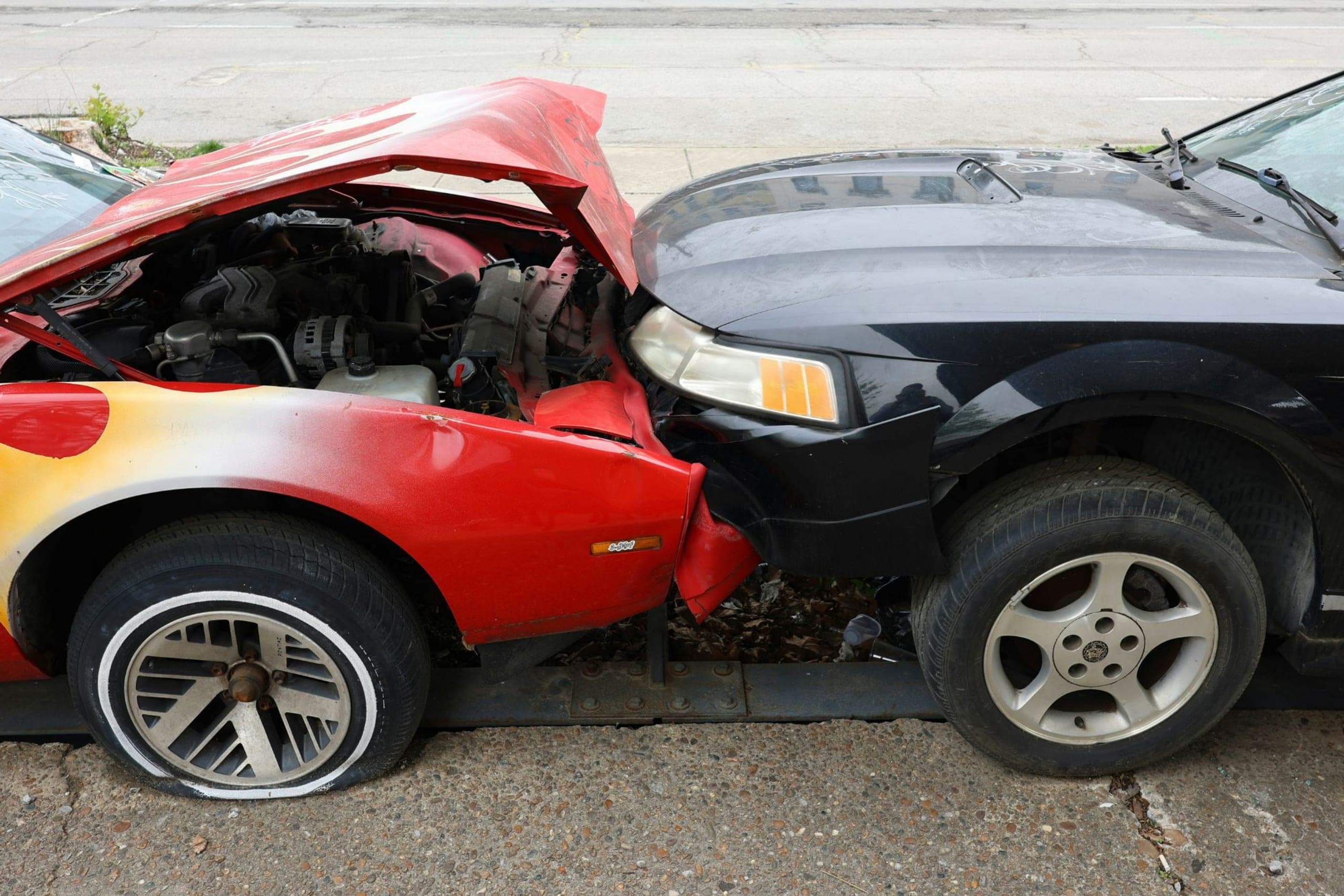
Usually the driver in back. NRS 484B.127 prohibits following more closely than is reasonable and prudent for the speed, traffic, and road conditions. The front driver can share fault if they cut in abruptly, reversed, or had non-working brake lights.
Who is at fault in a left-turn accident?
Usually the driver turning left. Under NRS 484B.253, a left-turning driver must yield to oncoming vehicles that are in the intersection or close enough to be an immediate hazard. Fault can shift if the oncoming driver ran a red light or was speeding. Merges work similarly: NRS 484B.263 requires drivers entering a freeway to yield to vehicles already on it.
How Do You Prove You Weren't at Fault in a Car Accident?
With evidence that shows what actually happened, collected before it disappears. The early steps in this Nevada car accident checklist lay the groundwork. The evidence that tends to move fault percentages includes:
- Photos showing where each car was hit, since damage location often tells the story
- Witness names and phone numbers, especially people with no connection to either driver
- Video from dashcams, nearby businesses, or traffic cameras, which is often overwritten quickly
- Vehicle crash data, since many cars record speed, braking, and other inputs in the seconds before a crash
- Phone records if the other driver may have been texting or on a call
- Your own words, since apologizing or guessing at the scene can be used against you
The National Highway Traffic Safety Administration explains that event data recorders capture pre-crash vehicle dynamics and driver inputs for a few seconds before, during, and after a crash. That data can confirm or contradict a driver's story, but it has to be preserved before the car is repaired or salvaged.
- Damage photos: Where each car was hit often tells the story
- Vehicle positions: Shots before cars are moved, if it is safe
- Independent witnesses: Names and numbers of people with no stake in the outcome
- Video: Dashcams, nearby businesses, traffic cameras
- Vehicle crash data: Speed and braking inputs saved by the car itself
- Police report: Read it closely and correct factual errors
- Phone records: If the other driver may have been distracted
- Your own words: No apologies or guesses about fault at the scene
What should you do if the insurer blames you?
Don't accept the percentage at face value. Ask the adjuster to explain in writing what evidence supports their fault decision, then send any photos, video, or witness information they didn't consider. If you received a citation connected to a crash with injuries, get advice before resolving it, since how it's handled can come up later in the claim.
When fault is reasonably clear, insurers can't simply stall. Nevada's unfair claims practices law, NRS 686A.310, lists failing to settle promptly once liability is reasonably clear as an unfair practice. You can also file a complaint with the Nevada Division of Insurance if a claim is being handled unfairly.
What If You Were Partly at Fault for the Crash?
You may still have a claim. As long as your share is 50% or less, Nevada lets you recover, reduced by your percentage. Even a small shift in fault changes the outcome, which is why a fault dispute is one of the clearest signs that you may need a lawyer, even for a minor crash.
If the at-fault driver had no insurance, fault still matters for a claim under your own uninsured motorist coverage, which pays only when the other driver was legally at fault.
Either way, the clock is running. Nevada's statute of limitations, NRS 11.190, generally gives you two years from the crash to file an injury lawsuit.
How Can Meesha Moulton Law Help With a Fault Dispute?
Fault percentages are negotiable, but only with evidence behind them. Meesha Moulton personally reviews every case, and consultations are free for personal injury matters, so you can find out how strong your position is before you accept an insurer's version of events.
Learn more about working with a Las Vegas car accident lawyer, or request a free consultation to talk through what happened.
Frequently Asked Questions About Fault in Nevada Car Accidents
Can a fault percentage change after the insurer's first decision?
Yes. An adjuster's first fault call is based on whatever evidence they have at that moment. New photos, video, witness statements, or vehicle crash data can change it, and fault percentages are often negotiated before a claim settles. If a case goes to court, a jury decides fault on its own.
What happens if both drivers are at fault in Nevada?
Each driver is assigned a percentage of fault. A driver who is 50% or less at fault can recover damages, reduced by their percentage. A driver who is 51% or more at fault recovers nothing. Insurers often negotiate these percentages before a claim ever reaches court.
Can I still recover if I was partially at fault?
Yes, if your share of fault is 50% or less. Your recovery is reduced by your percentage, so being found 20% at fault on a $50,000 claim would leave you with $40,000. At 51% or more, Nevada bars recovery entirely.
Who is at fault in a rear-end collision in Nevada?
Usually the driver in the back, because Nevada law prohibits following more closely than is reasonable and prudent. The front driver can share fault in some situations, such as cutting in suddenly, reversing, or driving with broken brake lights. Evidence like photos and video decides the close cases.
Does the police report determine fault in Nevada?
No. The police report is strong evidence, and an officer's findings and citations carry weight with insurers. But the insurance companies make their own fault decisions, and a jury makes the final call if the case goes to court. Errors in a report can often be addressed with a supplemental statement.
How do I prove I wasn't at fault in a car accident?
Gather evidence that shows what happened: photos of vehicle damage and positions, independent witness contacts, video from dashcams or nearby businesses, and vehicle crash data. Avoid apologizing or speculating about fault at the scene. The sooner evidence is preserved, the more weight it carries.